
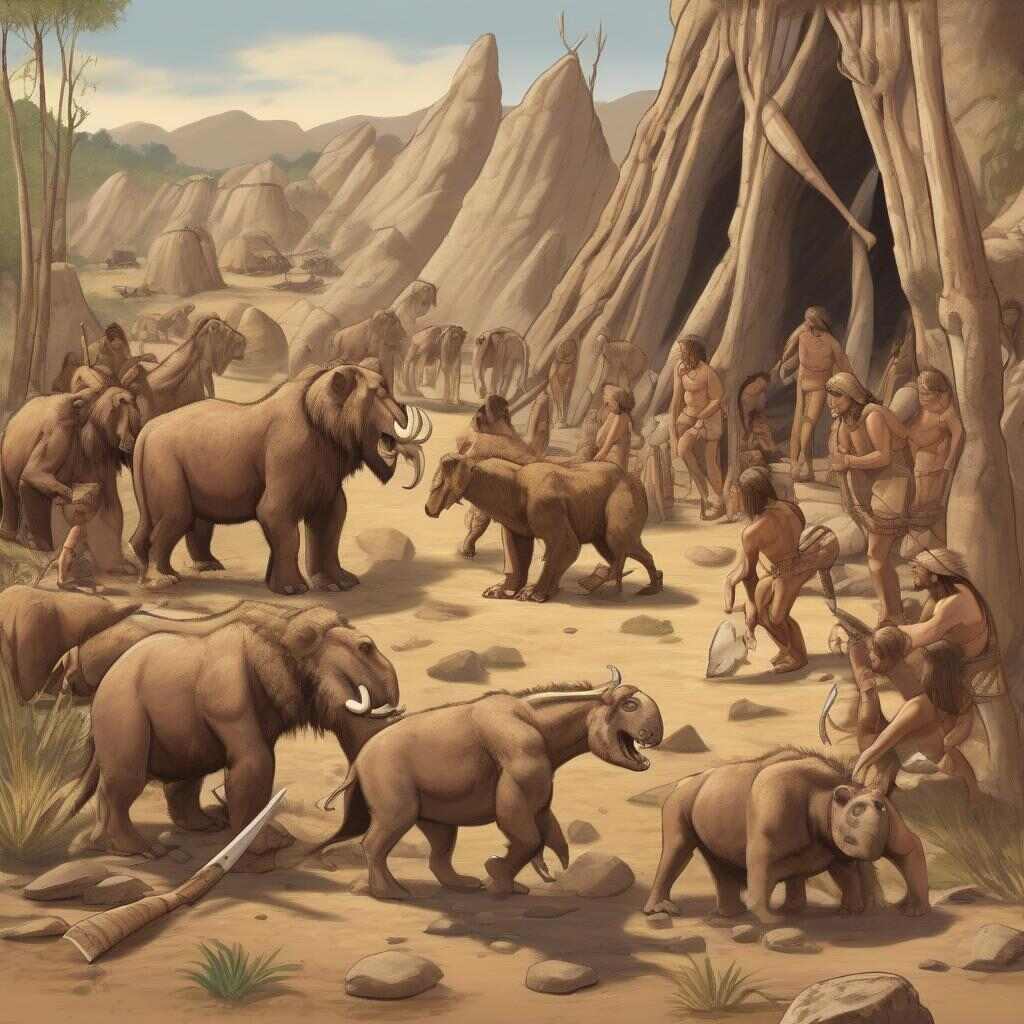
Q: What is the Paleolithic Period also known as?
A: Old Stone Age
The earliest period of human history marked by the use of stone tools.
Q: What type of tools were first used by humans during this period?
A: Stone
Early humans crafted tools from stone by flaking and chipping.
Q: What lifestyle did Paleolithic people lead?
A: Nomadic
They moved frequently in search of food and resources.
Q: What was the primary method of obtaining food?
A: Hunting
Paleolithic humans hunted animals for meat.
Q: What was another primary food source besides meat?
A: Gathering
They gathered wild plants, fruits, nuts, and seeds.
Q: What material were their tools primarily made from?
A: Flint
A type of hard, sedimentary rock used to make sharp tools.
Q: What significant skill involving heat did they develop?
A: Fire
They learned to create and control fire for warmth and cooking.
Q: What type of shelters did they use?
A: Caves
Natural caves provided protection from the elements and predators.
Q: What type of structures were sometimes used as temporary homes?
A: Huts
Constructed from branches, leaves, and animal skins.
Q: What were the primary animals hunted?
A: Mammoths
Large Ice Age animals that provided meat, bones, and hides.
Q: What is the name of the early stone tool culture?
A: Oldowan
The earliest stone tool industry, characterized by simple tools.
Q: What later stone tool culture followed the Oldowan?
A: Acheulean
Known for more advanced hand axes and tools.
Q: Who were the first known human ancestors in the Paleolithic?
A: Hominins
Early human-like species that used tools and walked upright.
Q: What artistic activity did they engage in?
A: Painting
Cave paintings depicting animals and hunting scenes.
Q: What was a common theme in their artwork?
A: Animals
Depictions of animals hunted for food, often found in caves.
Q: What form of social structure did they have?
A: Bands
Small groups or clans of related individuals living together.
Q: What was the main reason for their nomadic lifestyle?
A: Food
Constant movement was necessary to find new food sources.
Q: What continent is believed to be the origin of early humans?
A: Africa
The cradle of humanity where the earliest hominins evolved.
Q: What type of tool was commonly used for cutting and scraping?
A: Flake
Sharp-edged pieces of stone used for various purposes.
Q: What type of artifact indicates early human symbolic thought?
A: Venus
Small statuettes representing fertility and human form.
Q: What term describes early human species like Homo habilis?
A: Ancestors
Predecessors to modern humans who lived during the Paleolithic.
Q: What material was used for making clothing?
A: Hide
Animal skins were used to make clothing and shelters.
Q: What kind of weapons were used for hunting?
A: Spears
Long, pointed tools used for hunting large animals.
Q: What discovery helped Paleolithic people cook their food?
A: Fire
Allowed them to cook meat, making it easier to digest and safer to eat.
Q: What was the main cause of death among early humans?
A: Disease
Infectious diseases, injuries, and malnutrition were common causes.
Q: What stone tool culture is associated with Homo erectus?
A: Acheulean
Characterized by hand axes and more sophisticated tools.
Q: What technology did they develop for better hunting?
A: Bow
The bow and arrow improved hunting efficiency.
Q: What is the term for small, portable art objects from this period?
A: Portable
Artifacts like figurines that could be easily carried.
Q: What kind of burial practices did they have?
A: Ritual
Evidence of deliberate burial and grave goods suggests ritual practices.
Q: What was a common method of creating fire?
A: Friction
Rubbing sticks together or striking flint stones.
Q: What kind of tool was used to grind and process food?
A: Mortar
Mortar and pestle-like tools for grinding grains and nuts.
Q: What was the primary purpose of cave paintings?
A: Ritual
Likely used for ritualistic or communicative purposes.
Q: What were early humans primarily scavenging for?
A: Meat
Scavenging for animal carcasses left by predators.
Q: What is the term for the study of ancient human life?
A: Paleoanthropology
The study of the origins and development of early humans.
Q: What kind of stone was often used for making tools?
A: Flint
Preferred for its ability to be shaped into sharp edges.
Q: What was the main advantage of using fire?
A: Warmth
Provided heat, protection, and cooking abilities.
Q: What is another name for Homo sapiens?
A: Humans
Modern humans who emerged during the Paleolithic.
Q: What technique was used to shape tools?
A: Knapping
The process of shaping stone by striking it with another object.
Q: What animal is commonly associated with Paleolithic art?
A: Bison
Frequently depicted in cave paintings and carvings.
Q: What geographical feature did early humans follow?
A: Rivers
Water sources were crucial for survival and movement.
Q: What is the term for the end of the Paleolithic Period?
A: Mesolithic
The transitional period between the Paleolithic and Neolithic.
Q: What was a common tool used for cutting meat?
A: Knife
Stone knives were essential for butchering animals.
Q: What is the scientific term for early humans?
A: Hominins
The group that includes modern humans and their ancestors.
Q: What was a primary method of hunting in groups?
A: Ambush
Coordinated efforts to trap and kill large animals.
Q: What kind of shelters did they build besides using caves?
A: Huts
Temporary structures made from natural materials.
Q: What is the name of the period following the Paleolithic?
A: Neolithic
Marked by the development of agriculture and permanent settlements.
Q: What kind of art form was prevalent besides painting?
A: Carving
Stone, bone, and ivory carvings were common.
Q: What was a major technological advancement in toolmaking?
A: Blades
Long, thin stone tools with sharp edges.
Q: What role did women primarily play in Paleolithic societies?
A: Gathering
Collecting edible plants, fruits, and nuts.
Q: What is the term for the large Ice Age mammals hunted by humans?
A: Megafauna
Large animals like mammoths and saber-toothed cats.
Q: What kind of tools were used to sew hides together?
A: Needles
Bone needles with eyelets for threading sinew or plant fibers.
Q: What material was often used for making clothing and shelter?
A: Hide
Animal skins were tanned and used for various purposes.
Q: What significant evolutionary trait developed in this period?
A: Bipedalism
Walking on two legs, a key trait of hominins.
Q: What kind of food sources were gathered by Paleolithic people?
A: Plants
Edible plants, fruits, nuts, and seeds were important food sources.
Q: What is the name of the region where the earliest human fossils were found?
A: Africa
The Great Rift Valley is a significant archaeological site.
Q: What kind of societal structure did Paleolithic groups have?
A: Egalitarian
A relatively equal social structure with shared resources.
Q: What innovation allowed for the expansion of human diet?
A: Cooking
Fire enabled cooking, which made many foods more digestible.
Q: What type of weapon was developed for distance hunting?
A: Spear
Thrown or thrust weapons used for hunting and defense.
Q: What is the name of the early human species known for tool use?
A: Homo habilis
“Handy man” known for creating and using tools.
Q: What is the term for early humans’ movement patterns?
A: Migration
Movement from place to place in search of resources.
Q: What kind of social organization was typical in Paleolithic groups?
A: Clan
Extended family groups living and working together.
Q: What material besides stone was used for tools and weapons?
A: Bone
Bones were shaped into tools and weapons like needles and harpoons.
Q: What kind of hunting tool is a pointed stick?
A: Spear
Simple but effective tool for hunting large animals.
Q: What period directly follows the Paleolithic?
A: Mesolithic
A transitional period with advancements in tool technology.
Q: What type of art provides insight into early human life?
A: Cave
Cave paintings and carvings depict animals and hunting scenes.
Q: What is the name of the tool industry with advanced hand axes?
A: Acheulean
Known for bifacial tools used by Homo erectus and early Homo sapiens.
Q: What kind of food was processed using grinding tools?
A: Grains
Early humans ground grains and seeds into flour or meal.
Q: What is the term for the early phase of the Stone Age?
A: Paleolithic
The Old Stone Age, characterized by simple stone tools.
Q: What is the name of the small figurines found from this period?
A: Venus
Statuettes representing fertility and human form.
Q: What kind of hunting method involved chasing prey?
A: Persistence
Endurance hunting where prey is exhausted to the point of capture.
Q: What region is known for the earliest stone tool sites?
A: Africa
Sites like Olduvai Gorge provide evidence of early tool use.
Q: What kind of dietary practice involved eating raw meat?
A: Scavenging
Early humans often scavenged meat from animal carcasses.
Q: What is the term for the period of glacial expansion?
A: Ice Age
A time of cooler global temperatures and large ice sheets.
Q: What kind of animal is depicted in Lascaux cave paintings?
A: Horse
One of the many animals depicted in Paleolithic cave art.
Q: What tool was crucial for sewing clothing?
A: Needle
Bone needles were used to stitch hides and furs together.
Q: What kind of group organization did Paleolithic people have?
A: Band
Small, kinship-based groups that moved together.
Q: What is the term for making tools by chipping stone?
A: Flintknapping
The process of shaping stone tools by striking them.
Q: What kind of structure did they use for longer-term shelter?
A: Hut
Temporary structures built from natural materials.
Q: What animal provided both food and materials for tools?
A: Mammoth
Large Ice Age animals hunted for their meat, bones, and hides.
Q: What is the scientific study of human fossils called?
A: Paleontology
The study of ancient life, including human ancestors.
Q: What kind of symbolic representation was used in their art?
A: Abstract
Abstract symbols and shapes were used in cave paintings.
Q: What material was used for making ornaments?
A: Bone
Bone, ivory, and shell were used to create ornaments and tools.
Q: What kind of tool was used for digging?
A: Digging stick
Simple wooden tools used to dig for roots and tubers.
Q: What was the primary purpose of fire?
A: Cooking
Fire was crucial for cooking and making food safe to eat.
Q: What kind of art depicts human and animal forms?
A: Figurative
Cave paintings often show detailed representations of humans and animals.
Q: What was the primary fuel source for fires?
A: Wood
Wood and other plant materials were used as fuel.
Q: What is the name of the stone tool industry associated with Neanderthals?
A: Mousterian
Characterized by more advanced flake tools.
Q: What kind of gathering involved nuts and berries?
A: Foraging
Collecting edible plants and fruits from the environment.
Q: What was a common material for making weapons?
A: Stone
Stone was the primary material for crafting tools and weapons.
Q: What is the term for deliberate burial practices?
A: Ritual
Evidence suggests early humans practiced burial rituals.
Q: What kind of tool was used to process animal hides?
A: Scraper
Stone tools used to clean and prepare animal hides.
Q: What is the scientific study of ancient human activity?
A: Archaeology
The study of human history and prehistory through artifacts.
Q: What kind of animal bones were used for tools?
A: Mammoth
Bones of large animals like mammoths were used to make tools.
Q: What kind of social bonds were important in Paleolithic societies?
A: Kinship
Family and clan relationships were central to social organization.
Q: What was a key survival skill in the Paleolithic?
A: Hunting
Skillful hunting was crucial for obtaining food.
Q: What is the name of the stone tool culture before the Acheulean?
A: Oldowan
The earliest known stone tool culture.
Q: What is the term for large-scale animal hunts?
A: Megafauna
Hunting of large Ice Age animals like mammoths and bison.
Q: What type of shelter used natural features for protection?
A: Cave
Natural caves provided ready-made protection and shelter.
Q: What kind of tool was used for cutting plants?
A: Sickle
Stone sickles were used to cut grasses and plants.
Q: What is the term for early human art?
A: Rock art
Paintings and carvings on rock surfaces depicting early life
Team AajTakGK.com



 AAj TAK GK
Leave a reply to Team AajTakGK.Com Cancel reply