
Hey there, wonderful human! Ever feel like life’s just zipping by, and you’re caught in a whirlwind of to-do lists, worries, and endless distractions? Yeah, me too. There are days when my brain feels like a browser with 50 tabs open, all playing different music at full volume. And in that chaos, it’s easy to lose touch with ourselves, isn’t it? To forget what truly makes us tick, what brings us joy, and what kind of person we actually want to be.
But what if I told you there’s a surprisingly simple, ancient practice that can help you hit the pause button, quiet the noise, and actually start shaping yourself into the person you’ve always dreamed of being? Sounds a bit woo-woo, maybe? Or like something only monks on mountaintops do?
Well, let me tell you, it’s not. I’m talking about meditation, and trust me, it’s not about levitating or emptying your mind completely (phew, because my mind rarely empties!). It’s about building a little space, a quiet corner within yourself, where you can observe, reflect, and gently steer your inner world. And the best part? It’s genuinely an easy technique for profound self-transformation that you can absolutely start today, right where you are, no fancy robes or incense required.
My Own Journey (A Little Anecdote)
I remember years ago, I was super stressed out. My job was demanding, my personal life felt chaotic, and I was constantly anxious. Friends kept telling me, “Try meditation!” and I’d roll my eyes. “Meditate? Me? I can’t even sit still for five minutes without checking my phone!” The idea felt intimidating, like another chore I’d fail at.
But then, out of sheer desperation, I decided to give it a shot. I started with just five minutes, using a guided app. My mind wandered like a puppy off-leash, I fidgeted, and I probably spent half the time thinking about what I’d eat for dinner. But something shifted. A tiny, almost imperceptible shift. I felt a fraction less agitated. The next day, I tried again. And again. And slowly, those five minutes became ten, then fifteen.
It wasn’t a sudden, blinding flash of enlightenment. It was more like watching a cloudy sky slowly clear. The anxiety didn’t vanish overnight, but its grip loosened. I started responding to situations instead of reacting. I began to notice my own patterns – why I got angry, what triggered my worries. And that, my friends, is where the magic of self-transformation truly begins: awareness.
What is Self-Transformation Anyway?
Okay, “self-transformation” sounds big, right? Like you have to become a whole new person. But it’s not about discarding who you are; it’s about uncovering and enhancing the best version of yourself. It’s about:
- Becoming more resilient: Bouncing back from setbacks with grace.
- Cultivating inner peace: Finding calm amidst life’s storms.
- Improving your relationships: Responding with kindness and understanding.
- Boosting your focus and clarity: Cutting through the mental fog.
- Understanding your emotions: Not letting them run the show, but learning from them.
- Living more intentionally: Making choices that align with your true values.
- Reducing stress and anxiety: Giving your nervous system a much-needed break.
And guess what? Meditation is like a personal trainer for your mind, helping you build these internal muscles.
The Myth Busting Session: What Meditation ISN’T
Before we dive into the “how-to,” let’s clear up some common misconceptions: - It’s NOT about emptying your mind: Your mind thinks, that’s what it does! The goal isn’t to stop thoughts, but to notice them without getting carried away by them. Imagine your thoughts are clouds passing in the sky; you just watch them, you don’t jump on one and fly away with it.
- It’s NOT about finding bliss every time: Some sessions will feel calm, others restless, some boring. It’s all part of the practice. Just like going to the gym, some workouts feel great, others are a struggle.
- It’s NOT a religious practice (unless you want it to be): While it has roots in many spiritual traditions, meditation can be practiced by anyone, regardless of their beliefs, purely for its mental and emotional benefits.
- It’s NOT about being “good” at it: There’s no “good” or “bad” meditation. Showing up and trying is the practice itself. Every moment you bring your attention back is a success!
Easy Techniques You Can Start Today
Ready to give it a try? Awesome! Here are a few simple, beginner-friendly meditation techniques that require nothing but you and a few minutes of your time.
- The Breath Anchor (Mindfulness of Breath)
This is the classic starting point, and for good reason. Your breath is always with you, always in the present moment.
- How to do it:
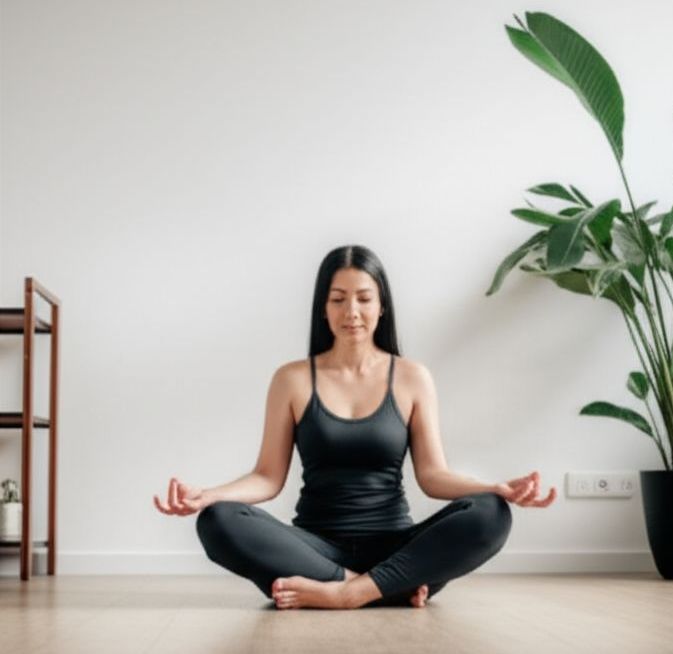
- Find a comfortable spot: You can sit on a chair, cross-legged on a cushion, or even lie down. The important thing is to be upright enough to stay alert, but relaxed.
- Close your eyes gently or soften your gaze: If closing your eyes feels weird, just look down softly without focusing on anything in particular.
- Bring your attention to your breath: Notice the sensation of the air entering your nostrils, filling your lungs, and leaving your body. Don’t try to change your breath, just observe it as it naturally is.
- Where do you feel it most? Maybe it’s the rise and fall of your belly, the expansion of your chest, or the subtle sensation at your nostrils. Pick one spot and gently rest your attention there.
- Thoughts will come: Oh, believe me, they will! Your mind will wander. That’s perfectly normal. When you notice your mind has drifted off (planning dinner, worrying about work, replaying a conversation), simply acknowledge the thought and gently, without judgment, bring your attention back to your breath.
- Start small: Begin with 3-5 minutes. Set a gentle timer. As you get more comfortable, you can gradually increase the duration.
- Why it works for transformation: By repeatedly bringing your attention back to your breath, you’re training your “attention muscle.” This helps you become less reactive to thoughts and external distractions in daily life, leading to more calm and clear decision-making. You’re building a foundation of presence.
- The Body Scan (Cultivating Awareness)
This technique helps you become more aware of your physical sensations and release tension you might not even realize you’re holding.
- How to do it:
- Lie down comfortably: This is often done lying on your back, perhaps with a pillow under your head and knees.
- Close your eyes or soften your gaze.
- Bring your attention to your toes: Notice any sensations there – tingling, warmth, coolness, pressure. Just observe, no need to change anything.
- Slowly move your attention up your body: From your toes to your feet, ankles, calves, knees, thighs, hips, abdomen, lower back, upper back, chest, fingertips, hands, wrists, forearms, elbows, upper arms, shoulders, neck, face, and finally the top of your head.
- Pause at each part: Spend 15-30 seconds at each section, really noticing what’s there. If you feel tension, acknowledge it, and on your exhale, gently imagine that tension softening or releasing.
- Don’t judge: If you feel nothing, that’s okay. If your mind wanders, gently guide it back to the part of the body you’re focusing on.
- Duration: 10-20 minutes is a good starting point. Many guided body scan meditations are available.
- Why it works for transformation: Often, our emotions and stress manifest as physical tension. By bringing conscious awareness to your body, you learn to identify these sensations and release them, promoting relaxation and reducing physical manifestations of stress. It also connects you more deeply to your physical self, which is vital for holistic well-being.
- Loving-Kindness Meditation (Metta Meditation) (Cultivating Compassion)
This is a beautiful practice for cultivating compassion – first for yourself, and then for others. It’s incredibly powerful for shifting your emotional state.
- How to do it:
- Find a comfortable seated position.
- Gently close your eyes or soften your gaze.
- Start with yourself: Bring to mind a phrase that expresses kindness and well-being for yourself. Repeat it silently, feeling the sentiment. Common phrases include:
- “May I be happy.”
- “May I be healthy.”
- “May I be safe.”
- “May I be free from suffering.”
- (Or a combination: “May I be happy, healthy, and safe.”)
- Extend to a loved one: Now, bring to mind someone you deeply care about – a family member, a close friend, a pet. Hold them in your mind’s eye and silently repeat the same phrases, directing the loving-kindness towards them: “May you be happy. May you be healthy. May you be safe. May you be free from suffering.”
- Extend to a neutral person: Think of someone you don’t have strong feelings about – a barista, a bus driver, someone you see regularly but don’t know well. Extend the same wishes to them: “May you be happy…” This can be challenging but is very powerful for broadening your compassion.
- Extend to a difficult person (optional, for later): If you feel ready, you can eventually extend these wishes to someone with whom you have difficulty. This is advanced and should only be done when you feel stable in the practice.
- Extend to all beings: Finally, broaden your awareness to all living beings – your community, your city, your country, the whole world. “May all beings be happy. May all beings be healthy. May all beings be safe. May all beings be free from suffering.”
- Duration: Start with 5-10 minutes.
- Why it works for transformation: This practice actively cultivates positive emotions like compassion, empathy, and joy. It can significantly reduce feelings of anger, resentment, and isolation, fostering deeper connections with yourself and others. It’s literally transforming your internal emotional landscape.
- Walking Meditation (Mindfulness in Motion)
Who says you have to sit still? This is perfect for those who find sitting a challenge or want to integrate mindfulness into their daily activity.
- How to do it:
- Find a quiet space: This could be a park, your backyard, or even a long hallway in your home.
- Slow down: The key is to walk much slower than you normally would.
- Bring your attention to your feet: Notice the sensation of your foot lifting, moving forward, the heel touching down, the weight shifting through your arch, and your toes releasing.
- Feel the ground beneath you: Notice the texture, the temperature.
- Engage all your senses: Notice the sights around you without getting lost in them, the sounds, the smells, the feeling of the air on your skin.
- If your mind wanders, gently bring it back to your feet and the sensations of walking.
- Duration: 10-30 minutes.
- Why it works for transformation: It helps you bring mindfulness into your everyday life, turning mundane activities into opportunities for presence. This reduces the feeling of constantly rushing and allows you to appreciate the richness of the present moment, fostering a more grounded and peaceful existence.
Tips for the Beginner Meditator (Your Toolkit for Success!) - Consistency over Duration: Five minutes every day is far more beneficial than one hour once a month. Make it a daily habit, even if it’s super short.
- Be Patient and Kind to Yourself: There will be days when it feels easy and days when it feels like a struggle. That’s okay! Don’t judge your experience. Just show up and try again. Every time your mind wanders and you bring it back, you’re strengthening your mental muscle.
- Find Your Time: When does it feel best for you? First thing in the morning before the day gets crazy? During your lunch break? Before bed? Experiment and find a time that works consistently.
- Use Guided Meditations: Especially when starting, guided meditations are invaluable. Apps like Calm, Headspace, Insight Timer, and even YouTube offer thousands of free guided meditations. They provide instructions and help keep you focused.
- Don’t Strive for a Blank Mind: Seriously, this is the biggest trap. Your mind will think. The practice is noticing the thoughts and gently returning your attention, not stopping them.
- Comfort is Key (but not too comfortable): You want to be comfortable enough to relax, but not so comfortable that you fall asleep (unless you’re doing a specific sleep meditation!).
- Journal Your Experience: Sometimes it helps to jot down how you felt before and after your meditation. You might notice subtle shifts over time that you wouldn’t otherwise.
- Expect Distractions: External noises, internal thoughts, physical discomfort – they’re all part of the meditation experience. Acknowledge them, and gently bring your focus back.
- Your Breath is Your Best Friend: When in doubt, always return to the sensation of your breath. It’s your anchor to the present moment.
The Ripple Effect of Daily Practice
You might be thinking, “Okay, so I sit still for a few minutes. How does that transform my entire life?”
It’s subtle, but powerful. Think of it like a tiny pebble dropped into a vast lake. The pebble is your daily meditation. The ripples are the changes that spread throughout your life: - Less Reactivity: That annoying co-worker? That traffic jam? You might find yourself taking a deep breath instead of instantly getting frustrated. You gain a tiny space between stimulus and response.
- Greater Clarity: Decisions become clearer. You’re less swayed by impulsive urges and more by what truly aligns with your goals.
- Enhanced Emotional Intelligence: You start understanding your own emotions better, and also recognizing them in others, leading to stronger relationships.
- Increased Resilience: When life throws a curveball, you’re better equipped to handle it, to bend without breaking.
- More Joy and Gratitude: As you become more present, you start noticing and appreciating the small moments of joy that you might have rushed past before.
I’ve seen it in my own life. I still have bad days, of course, but my baseline level of anxiety is significantly lower. I’m more patient with my family, more focused at work, and just generally feel more… present. It’s not about being perfectly calm all the time; it’s about having a tool to return to calm when the chaos inevitably arises.
Ready to Start Your Transformation?
So, there you have it. Meditation isn’t some mystical, unattainable practice. It’s a practical, easy-to-learn technique that offers profound benefits for your self-transformation journey. It’s about building a healthier relationship with your own mind, one gentle breath at a time.
Don’t wait for the “perfect” time or for everything to be just right. That time will never come. The beauty of meditation is that it meets you exactly where you are, right now.
Pick one of the easy techniques above. Set a timer for just 3-5 minutes. Find a quiet spot. And just begin.
Your self-transformation starts today. And it’s going to be an amazing journey, one mindful moment at a time. You’ve got this

 AAj TAK GK
Leave a comment