
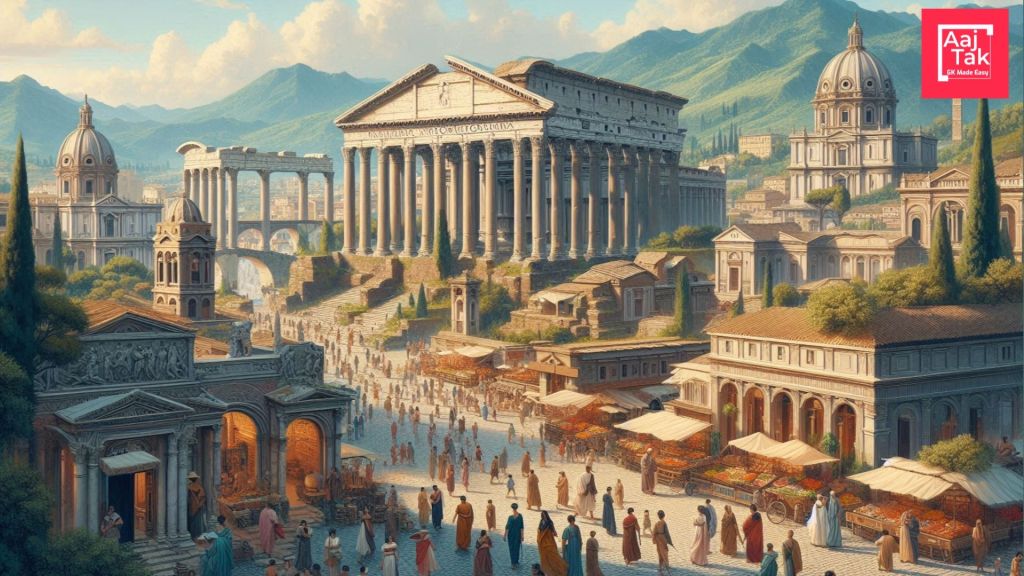
Hey there, future historian! Ever wondered what life was like in ancient times? Classical civilizations are a fascinating subject, and today, we’re diving into some of the most influential ones. Grab a cup of coffee (or tea, if you prefer), and let’s embark on this journey together.
What Are Classical Civilizations?
Classical civilizations refer to the ancient societies that laid the foundations for modern culture, politics, and thought. We’re talking about civilizations like Ancient Greece, Rome, China, and India. These societies thrived from around 500 BCE to 500 CE and left an indelible mark on history.
Ancient Greece: The Birthplace of Democracy
Ancient Greece: Philosophy and Politics
Imagine living in a society where the idea of democracy was just starting to take shape. Ancient Greece is often hailed as the cradle of Western civilization. The Greeks were known for their remarkable contributions to philosophy, politics, and the arts.
Socrates, Plato, and Aristotle
You might have heard of Socrates, Plato, and Aristotle. These philosophers asked big questions about life, ethics, and the universe. Socrates, with his method of questioning, encouraged critical thinking. Plato, his student, founded the Academy, one of the earliest institutions of higher learning. Aristotle, Plato’s student, made significant contributions to science and logic.
Example: Think about your classroom debates. Socrates’ method is similar to your teacher asking you thought-provoking questions to help you think deeper. Plato’s Academy? Imagine the first-ever university where students discussed ideas all day long!
The Athenian Democracy
The concept of democracy was born in Athens. Citizens (well, the male ones) gathered in the Assembly to vote on important issues. It wasn’t perfect, but it was revolutionary for its time.
Example: Imagine a giant open-air meeting where everyone could voice their opinions and vote on laws. It’s like your student council, but on a much larger scale and with a lot more power.
Rome: The Builders of an Empire
Rome: Engineering and Law
When we think of Rome, we often picture grand structures like the Colosseum and the aqueducts. The Romans were master builders and engineers. They also developed a complex legal system that influences us even today.
Roman Engineering Marvels
The Romans were incredible engineers. They built roads, aqueducts, and public baths. These structures were not only functional but also impressive feats of architecture.
Example: Imagine your local highway system. Now, think about the Romans building roads that lasted for centuries, connecting vast parts of their empire. Or consider the aqueducts, which brought fresh water into cities, much like our modern plumbing systems.
The Roman Legal System
The Roman legal system, with its emphasis on written laws and justice, laid the groundwork for many legal systems worldwide. The idea of “innocent until proven guilty” comes from Roman law.
Example: If you’ve ever watched a courtroom drama, you’ve seen the influence of Roman law. Their principles of justice and legal procedures are still evident in our courts today.
Ancient China: Innovators and Philosophers
Ancient China: Innovation and Wisdom
Ancient China was a land of great innovation and philosophical thought. From the Great Wall to Confucianism, China’s contributions to civilization are immense.
The Great Wall and Other Innovations
The Great Wall of China is one of the most remarkable feats of engineering. But that’s not all; ancient Chinese civilization also gave us inventions like paper, gunpowder, and the compass.
Example: Think about your daily school supplies – paper for your notes, compasses in math class. Ancient China’s innovations have been integrated into our everyday lives.
Confucianism and Daoism
Confucius, a philosopher, emphasized the importance of family, respect, and education. His teachings shaped Chinese society for centuries. Daoism, another major philosophy, taught harmony with nature and simplicity in life.
Example: Confucianism is like your family’s value system, emphasizing respect for elders and the importance of education. Daoism, on the other hand, is like finding peace in a busy world by taking a walk in nature.
India: The Land of Spirituality and Mathematics
Ancient India: Spirituality and Science
Ancient India was a hub of spiritual thought and scientific advancement. From the teachings of Buddhism to the numeral system, India’s influence is vast.
Buddhism and Hinduism
Buddhism, founded by Siddhartha Gautama (Buddha), teaches the path to enlightenment through meditation and ethical living. Hinduism, with its rich tapestry of gods, rituals, and philosophies, has shaped Indian culture profoundly.
Example: Imagine finding a way to inner peace and understanding through meditation and ethical living – that’s Buddhism. Hinduism is like a vibrant tapestry of festivals, rituals, and stories that enrich everyday life.
Mathematical Contributions
Ancient Indian mathematicians made significant contributions, including the concept of zero and the decimal system. These advancements are fundamental to modern mathematics.
Example: Next time you’re doing math homework, remember the concept of zero and the decimal system – ancient Indian mathematicians laid the groundwork for these essential tools.
The Legacy of Classical Civilizations
The Lasting Impact of Classical Civilizations
These classical civilizations have left an indelible mark on our world. Their philosophies, innovations, and cultural achievements continue to influence us today.
Cultural Exchange and Influence
These civilizations interacted and influenced each other in various ways. For instance, the Silk Road facilitated trade and cultural exchange between the East and West.
Example: Imagine a grand trade route where merchants exchanged goods like silk and spices, as well as ideas and technologies. This exchange enriched all the civilizations involved.
Modern Connections
We still see the influence of these ancient civilizations in our modern world. From democratic principles to engineering marvels, from philosophical thoughts to mathematical concepts, their legacies are alive and well.
Example: The next time you use a road, write on paper, or engage in a debate, remember the ancient Greeks, Romans, Chinese, and Indians who contributed to these aspects of our lives.
Conclusion
Understanding classical civilizations helps us appreciate the foundations of our modern world. These ancient societies were pioneers in various fields, and their contributions continue to shape our lives. As you explore history, you’ll find that the past is not so distant after all – it’s a part of our everyday existence.
So, what do you find most fascinating about classical civilizations? Share your thoughts in the comments below!
Team AajTak.COM

 AAj TAK GK
Leave a comment