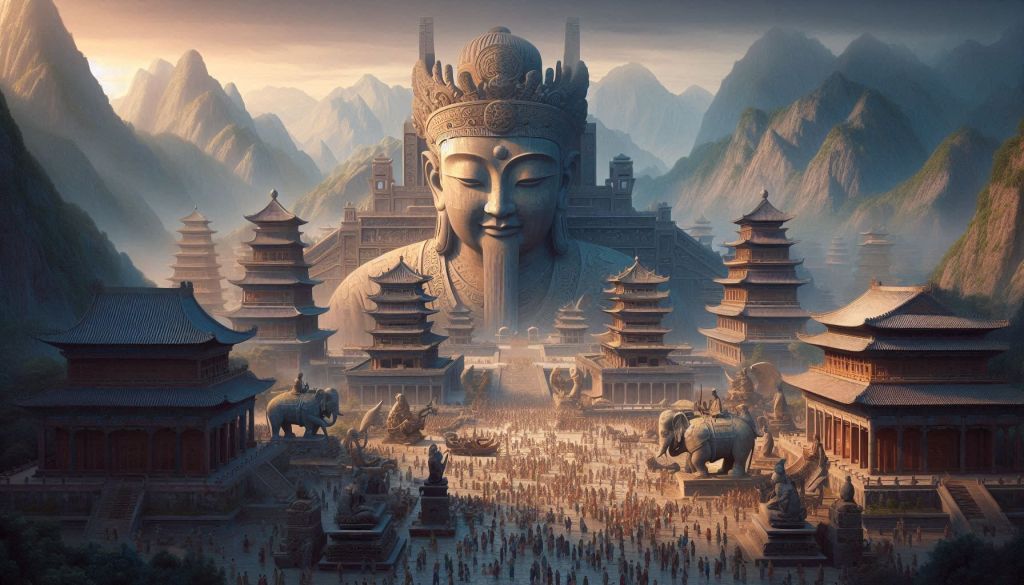
Discover the captivating history of ancient China, tracing the rise of early civilizations from 2000 BCE to 500 CE. This journey takes you through the legendary Xia Dynasty, the bronze age brilliance of the Shang, the philosophical flourish of the Zhou, the unification and innovation of the Qin, and the golden age of the Han Dynasty. Learn about the daily life, religious beliefs, art, science, and technological advancements that laid the foundation for one of the world’s oldest continuous cultures. Perfect for history enthusiasts and beginners alike, this exploration of ancient China offers a rich tapestry of stories and insights into a remarkable era.”
Sure! Here are 100 multiple-choice questions (MCQs) about Ancient History, specifically focusing on early civilizations in China, covering up to 500 CE. Each question is followed by its answer.
Multiple Choice Questions
1 What is the earliest known dynasty in China?
- A) Shang
- B) Zhou
- C) Qin
- D) Han
Answer: A) Shang
2 Which ancient Chinese philosophy emphasizes harmony with nature?
- A) Confucianism
- B) Daoism
- C) Legalism
- D) Buddhism
Answer: B) Daoism
3 The Great Wall of China was primarily built during which dynasty?
- A) Zhou
- B) Han
- C) Qin
- D) Tang
Answer: C) Qin
4 Who is considered the founder of Daoism?
- A) Confucius
- B) Laozi
- C) Sun Tzu
- D) Zhuangzi
Answer: B) Laozi
5 What was the primary purpose of oracle bones in the Shang Dynasty?
- A) To decorate tombs
- B) To communicate with ancestors
- C) To inscribe laws
- D) To record history
Answer: B) To communicate with ancestors - Ancient Egypt One-Word Answer Questions with Descriptions
6 Which of the following was a primary agricultural product in ancient China?
- A) Wheat
- B) Barley
- C) Rice
- D) Corn
Answer: C) Rice
7 The Mandate of Heaven is a concept associated with which dynasty?
- A) Shang
- B) Zhou
- C) Han
- D) Qin
Answer: B) Zhou
8 Which of the following inventions is attributed to ancient China?
- A) The compass
- B) Gunpowder
- C) Papermaking
- D) All of the above
Answer: D) All of the above
9 What was the capital of the Shang Dynasty?
- A) Luoyang
- B) Kaifeng
- C) Anyang
- D) Xi’an
Answer: C) Anyang
10 What type of government did the Qin Dynasty establish?
- A) Feudal
- B) Centralized
- C) Confucian
- D) Democratic
Answer: B) Centralized
11 Who is known for unifying China and becoming its first emperor?
- A) Liu Bang
- B) Qin Shi Huang
- C) Confucius
- D) Sun Wu
Answer: B) Qin Shi Huang
12 Which ancient Chinese text is a fundamental work of Confucianism?
- A) Dao De Jing
- B) Book of Songs
- C) Analects
- D) Art of War
Answer: C) Analects
13 The Silk Road was significant for what reason?
- A) Spread of Buddhism
- B) Trade routes
- C) Cultural exchange
- D) All of the above
Answer: D) All of the above
14 What was the main purpose of the Terracotta Army?
- A) To protect the Emperor in the afterlife
- B) To serve as entertainment
- C) To honor deities
- D) To symbolize prosperity
Answer: A) To protect the Emperor in the afterlife
15 Which mountain range separates China from the Indian subcontinent?
- A) Himalayas
- B) Altai
- C) Tian Shan
- D) Qin Ling
Answer: A) Himalayas
16 Which dynasty is known for the development of paper?
- A) Xia
- B) Shang
- C) Han
- D) Sui
Answer: C) Han
17 Who is regarded as the founder of the Han Dynasty?
- A) Liu Bang
- B) Wang Mang
- C) Sima Qian
- D) Emperor Wu
Answer: A) Liu Bang
18 The concept of ‘Filial Piety’ is mainly derived from which philosophy?
- A) Legalism
- B) Daoism
- C) Confucianism
- D) Buddhism
Answer: C) Confucianism
19 What was the primary currency used during the Qin Dynasty?
- A) Silver coins
- B) Cowrie shells
- C) Bronze coins
- D) Gold ingots
Answer: C) Bronze coins
20 Which of the following artifacts is associated with the burial of Chinese emperors?
- A) Jade figurines
- B) Terracotta figurines
- C) Spinning tops
- D) Bronze mirrors
Answer: B) Terracotta figurines
21 What is considered the major innovation of the Zhou Dynasty?
- A) Gunpowder
- B) Iron plow
- C) Compass
- D) Mechanical clock
Answer: B) Iron plow
22 The Yellow River is also known as what?
- A) Yangtze
- B) Huan He
- C) Huai
- D) Liao
Answer: B) Huan He - Ancient History: Exploring the Early Civilizations with a Focus on the Indus Valley
23 The first code of law in ancient China was established by which dynasty?
- A) Shang
- B) Qin
- C) Han
- D) Zhou
Answer: B) Qin
24 Which Chinese dynasty lasted the longest?
- A) Xia
- B) Shang
- C) Zhou
- D) Han
Answer: C) Zhou
25 Which ancient Chinese philosopher wrote “The Art of War”?
- A) Laozi
- B) Confucius
- C) Sun Tzu
- D) Zhuangzi
Answer: C) Sun Tzu
26 The invention of the crossbow is attributed to which dynasty?
- A) Shang
- B) Zhou
- C) Qin
- D) Han
Answer: B) Zhou
27 What was a significant outcome of the Warring States period?
- A) Unification of China
- B) Development of agriculture
- C) Expansion of trade
- D) Increased feudalism
Answer: A) Unification of China
28 Which Chinese dynasty is known for the expansion of its territory through military conquests?
- A) Xia
- B) Zhou
- C) Qin
- D) Han
Answer: D) Han
29 What title was given to the emperors of the Han Dynasty?
- A) Duke
- B) King
- C) Son of Heaven
- D) Chieftain
Answer: C) Son of Heaven
30 Which of the following was a key trade good in ancient China?
- A) Potatoes
- B) Silk
- C) Spices
- D) Gold
Answer: B) Silk
31 What term describes the family-based social structure in ancient China?
- A) Clan
- B) Guild
- C) Tribe
- D) Commune
Answer: A) Clan
32 Which emperor is known for his efforts to standardize Chinese writing?
- A) Qin Shi Huang
- B) Liu Bang
- C) Han Wudi
- D) Emperor Gaozu
Answer: A) Qin Shi Huang
33 What was a significant achievement during the Han Dynasty regarding trade routes?
- A) Creation of the Silk Road
- B) Establishment of the Grand Canal
- C) Invention of the wheel
- D) Introduction of coins
Answer: A) Creation of the Silk Road
34 What natural disaster frequently impacted ancient Chinese agriculture?
- A) Earthquakes
- B) Floods
- C) Droughts
- D) Hurricanes
Answer: B) Floods
35 Which of the following was a key idea promoted by Confucianism?
- A) Warfare
- B) Individualism
- C) Social hierarchy
- D) Non-violence
Answer: C) Social hierarchy
36 What was the primary role of a shaman in ancient Chinese society?
- A) Political advisor
- B) Religious leader
- C) Military commander
- D) Agricultural expert
Answer: B) Religious leader
37 Which of the following best describes the social hierarchy in ancient China?
- A) Rulers, Merchants, Farmers
- B) Merchants, Farmers, Rulers
- C) Scholars, Farmers, Artisans, Merchants
- D) Warriors, Artisans, Scholars
Answer: C) Scholars, Farmers, Artisans, Merchants
38 The early forms of writing in China were primarily used for what purpose?
- A) Literature
- B) Administration
- C) Religious texts
- D) Communication with other nations
Answer: B) Administration
39 Which ancient Chinese ruler is known for his legal reforms and harsh punishments?
- A) Qin Shi Huang
- B) Liu Bang
- C) Confucius
- D) Wang Mang
Answer: A) Qin Shi Huang
40 What was one of the main achievements of the Han Dynasty in the field of science?
- A) Discovery of the compass
- B) Development of acupuncture
- C) Invention of printmaking
- D) Development of the astrolabe
Answer: B) Development of acupuncture
41 What was the philosophy of Legalism primarily focused on?
- A) Moral integrity
- B) Harsh laws and central authority
- C) Harmony with nature
- D) Family loyalty
Answer: B) Harsh laws and central authority
42 The Terracotta Army was discovered in the tomb of which emperor?
- A) Liu Bang
- B) Qin Shi Huang
- C) Han Wudi
- D) Gaozu
Answer: B) Qin Shi Huang
43 What major trade commodity was unique to ancient China?
- A) Spices
- B) Silk
- C) Gold
- D) Cotton
Answer: B) Silk
44 The philosophy of Confucianism stresses the importance of what?
- A) Nature
- B) Social harmony
- C) Warfare
- D) Trade
Answer: B) Social harmony
45 What was one of the significant impacts of the Silk Road on China?
- A) Promoted isolation
- B) Economic prosperity and cultural exchange
- C) Decline in trade
- D) Rise of feudalism
Answer: B) Economic prosperity and cultural exchange
46 Who was known as the “Martial Emperor” of the Han Dynasty?
- A) Liu Bang
- B) Han Wudi
- C) Wang Mang
- D) Sima Qian
Answer: B) Han Wudi
47 What skill is learned as a part of Confucian education?
- A) Farming
- B) Military strategy
- C) Rhetoric and moral philosophy
- D) Navigation
Answer: C) Rhetoric and moral philosophy
48 The Han Dynasty is often considered a high point for which aspect of Chinese culture?
- A) Literature and arts
- B) Military strength
- C) Religious diversity
- D) Feudalism
Answer: A) Literature and arts
49 Which invention allowed for better communication and record-keeping in ancient Chinese society?
- A) The printing press
- B) Paper
- C) The telephone
- D) The postal service
Answer: B) Paper
50 Which Chinese philosopher is best known for his ethical teachings and belief in human goodness?
- A) Laozi
- B) Zhuangzi
- C) Confucius
- D) Mencius
Answer: C) Confucius - “Discovering Ancient China: The Early Civilizations Up to 500 CE”
51 The idea of yin and yang is primarily associated with which belief system?
- A) Confucianism
- B) Daoism
- C) Buddhism
- D) Legalism
Answer: B) Daoism
52 Which major river is considered the “cradle of Chinese civilization”?
- A) Yellow River (Huang He)
- B) Yangtze River
- C) Pearl River
- D) Mekong River
Answer: A) Yellow River (Huang He)
53 What role did agriculture play in the development of early Chinese civilization?
- A) Minimal role
- B) Deterrent to urbanization
- C) Foundation for economic stability
- D) Cultural decline
Answer: C) Foundation for economic stability
54 Which Chinese dynasty is known for its advancements in astronomy?
- A) Xia
- B) Shang
- C) Han
- D) Song
Answer: C) Han
55 What significant material was used for making tools and weapons in ancient China?
- A) Iron
- B) Bronze
- C) Copper
- D) Gold
Answer: B) Bronze
56 The concept of the “Five Relationships” is associated with which philosophy?
- A) Daoism
- B) Buddhism
- C) Confucianism
- D) Legalism
Answer: C) Confucianism
57 Which of the following was widely recognized during the Han Dynasty?
- A) Artistic innovations
- B) Military failures
- C) Decline of literacy
- D) Revolutions
Answer: A) Artistic innovations
58 What was the traditional Chinese belief about the emperor’s rule?
- A) Divine right
- B) Meritocracy
- C) Popular sovereignty
- D) Oligarchy
Answer: A) Divine right
59 Which historical text serves as a record of the Han Dynasty’s history?
- A) Book of Songs
- B) Historical Records (Shiji)
- C) Classic of Poetry
- D) Annals of the Bamboo
Answer: B) Historical Records (Shiji)
60 Which of the following marked the end of the Western Han Dynasty?
- A) The rise of the Qin Dynasty
- B) Eunuch corruption and rebellion
- C) Mongolian invasions
- D) Confucian reforms
Answer: B) Eunuch corruption and rebellion
61 What was the role of the Grand Canal in ancient China?
- A) Defensive barrier
- B) Major trade route
- C) Agricultural irrigation
- D) Cultural exchange
Answer: B) Major trade route
62 What was the main religion during the Han Dynasty?
- A) Buddhism
- B) Daoism
- C) Confucianism
- D) Legalism
Answer: C) Confucianism
63 Which of the following was a common form of entertainment in ancient China?
- A) Sports
- B) Puppet shows
- C) Theater
- D) Literature readings
Answer: B) Puppet shows
64 What form of writing became standardized during the Qin Dynasty?
- A) Seal script
- B) Oracle bone script
- C) Clerical script
- D) Cursive script
Answer: C) Clerical script
65 Which ancient Chinese philosopher is known for the quote “The superior man is distressed by his want of ability”?
- A) Confucius
- B) Laozi
- C) Mozi
- D) Zhuangzi
Answer: A) Confucius
66 Which city became the capital of the Eastern Han Dynasty?
- A) Luoyang
- B) Xi’an
- C) Chang’an
- D) Anyang
Answer: A) Luoyang
67 The “Sino-Tibetan” language family includes which of the following?
- A) Mandarin
- B) Hindi
- C) Mongolian
- D) Korean
Answer: A) Mandarin
68 What was the relationship between the Shang and Zhou Dynasties?
- A) Enemies
- B) Allies
- C) Ancestors
- D) No relationship
Answer: A) Enemies
69 Which invention is credited to the Chinese during the Han Dynasty?
- A) The wheel
- B) The clock
- C) The seismograph
- D) The astrolabe
Answer: C) The seismograph
70 What was the name of the philosophical text attributed to Laozi?
- A) Dao De Jing
- B) Analects
- C) Book of Changes
- D) Zhuangzi
Answer: A) Dao De Jing
71 Which dynasty initiated the Silk Road trade route?
- A) Qin
- B) Han
- C) Shang
- D) Zhou
Answer: B) Han
72 What is the term for a period of peace and prosperity during the Han Dynasty known as?
- A) Era of Warring States
- B) Pax Sinica
- C) Golden Age
- D) Age of Enlightenment
Answer: B) Pax Sinica
73 Which of the following is NOT a major belief in Buddhism?
- A) Four Noble Truths
- B) Eightfold Path
- C) Mandate of Heaven
- D) Nirvana
Answer: C) Mandate of Heaven
74 The ‘Spring and Autumn Period’ is a part of which larger historical era?
- A) Shang Dynasty
- B) Zhou Dynasty
- C) Qin Dynasty
- D) Han Dynasty
Answer: B) Zhou Dynasty
75 The use of “divination” in ancient China was primarily used for what purpose?
- A) Communication
- B) To predict the future
- C) Healing
- D) Record-keeping
Answer: B) To predict the future
76 What significant role did women play in ancient Chinese agriculture?
- A) Primary farmers
- B) Only overseers
- C) No role
- D) Reliant on men
Answer: A) Primary farmers
77 Which emperor was responsible for the first census in Chinese history?
- A) Qin Shi Huang
- B) Han Wudi
- C) Liu Bang
- D) Wang Mang
Answer: B) Han Wudi
78 What is the significance of the term “Zhongguo”?
- A) Middle Kingdom
- B) Land of the Dragons
- C) Empire of the East
- D) Ancient Civilization
Answer: A) Middle Kingdom
79 What historical document provides insights into the lives of the early Chinese dynasties?
- A) The Book of Changes
- B) The Tao Te Ching
- C) The Records of the Grand Historian
- D) Both A and C
Answer: D) Both A and C
80 Which of the following was a primary political ideology in ancient China?
- A) Feudalism
- B) Democracy
- C) Socialism
- D) Monarchism
Answer: A) Feudalism
81 What important role did the scholar-officials play in ancient China?
- A) Military leaders
- B) Administration and governance
- C) Agricultural workers
- D) Trade facilitators
Answer: B) Administration and governance
82 Which material was highly prized for making important artifacts in Shang Dynasty burials?
- A) Gold
- B) Jade
- C) Bronze
- D) Silver
Answer: B) Jade
83 What philosophy emerged as a response to the chaos of the Warring States period?
- A) Daoism
- B) Confucianism
- C) Legalism
- D) Both B and C
Answer: D) Both B and C
84 The largest city in the world during the Han Dynasty was known as?
- A) Luoyang
- B) Xi’an (Chang’an)
- C) Anyang
- D) Kaifeng
Answer: B) Xi’an (Chang’an)
85 Which ancient civilization influenced the development of early Chinese philosophical thought?
- A) Egyptian
- B) Babylonian
- C) Indian
- D) Greek
Answer: C) Indian
86 Which term refers to the ancestral worship practice in ancient Chinese culture?
- A) Feng Shui
- B) Tian
- C) Jiao
- D) Ancestor veneration
Answer: D) Ancestor veneration
87 What is the primary focus of the “Tao Te Ching”?
- A) Legal principles
- B) Military strategy
- C) Philosophical teachings about the Dao
- D) Historical chronology
Answer: C) Philosophical teachings about the Dao
88 Which Chinese dynasty saw the introduction of Buddhism?
- A) Han
- B) Shang
- C) Zhou
- D) Qin
Answer: A) Han
89 In ancient China, what was the purpose of a “tomb mound”?
- A) Market area
- B) Burial place for the deceased
- C) Shrine for worship
- D) Living quarters for priests
Answer: B) Burial place for the deceased
90 The Chinese calendar traditionally follows which lunar phenomenon?
- A) New Moon
- B) Full Moon
- C) Eclipses
- D) Summer solstice
Answer: A) New Moon
91 Which factor was crucial for the agricultural success of ancient Chinese civilization?
- A) Use of irrigation
- B) Fertile plains
- C) Use of plows
- D) All of the above
Answer: D) All of the above
92 What is considered the primary source of Confucius’s teachings?
- A) Dao De Jing
- B) Analects
- C) Book of Ethics
- D) Historical Records
Answer: B) Analects
93 Who led the unsuccessful revolt known as the “Red Eyebrows”?
- A) Wang Mang
- B) Liu Bang
- C) Han Wudi
- D) Qin Shi Huang
Answer: A) Wang Mang
94 What significant event marked the start of the Qin Dynasty?
- A) The construction of the Great Wall
- B) The unification of China
- C) The invention of paper
- D) The founding of Daoism
Answer: B) The unification of China
95 Which artifact serves as evidence of complex social hierarchies in the Shang Dynasty?
- A) Bronze vessels
- B) Terracotta warriors
- C) Silk fabrics
- D) Ceramics
Answer: A) Bronze vessels
96 What was a major trade item that the Han exported to the West?
- A) Glassware
- B) Spices
- C) Silk
- D) Salt
Answer: C) Silk
97 The concept of “Li” in Confucianism addressed what aspect of society?
- A) Social etiquette and propriety
- B) Legal codes
- C) Military discipline
- D) Economic transactions
Answer: A) Social etiquette and propriety
98 Which of the following best describes the educational practices in ancient China?
- A) Exclusively for the elite
- B) Accessible to the public
- C) Focused on military training
- D) Primarily religious education
Answer: A) Exclusively for the elite
99 How did ancient Chinese rulers justify their rule?
- A) Merit-based appointments
- B) Military conquests
- C) Mandate of Heaven
- D) Popular consent
Answer: C) Mandate of Heaven
100 The Zhou Dynasty’s political system was characterized by what?
- A) Centralized authority
- B) Feudalism
- C) Decentralization
- D) Anarchy
Answer: B) Feudalism
Team AajTak.COM

 AAj TAK GK
Leave a comment