
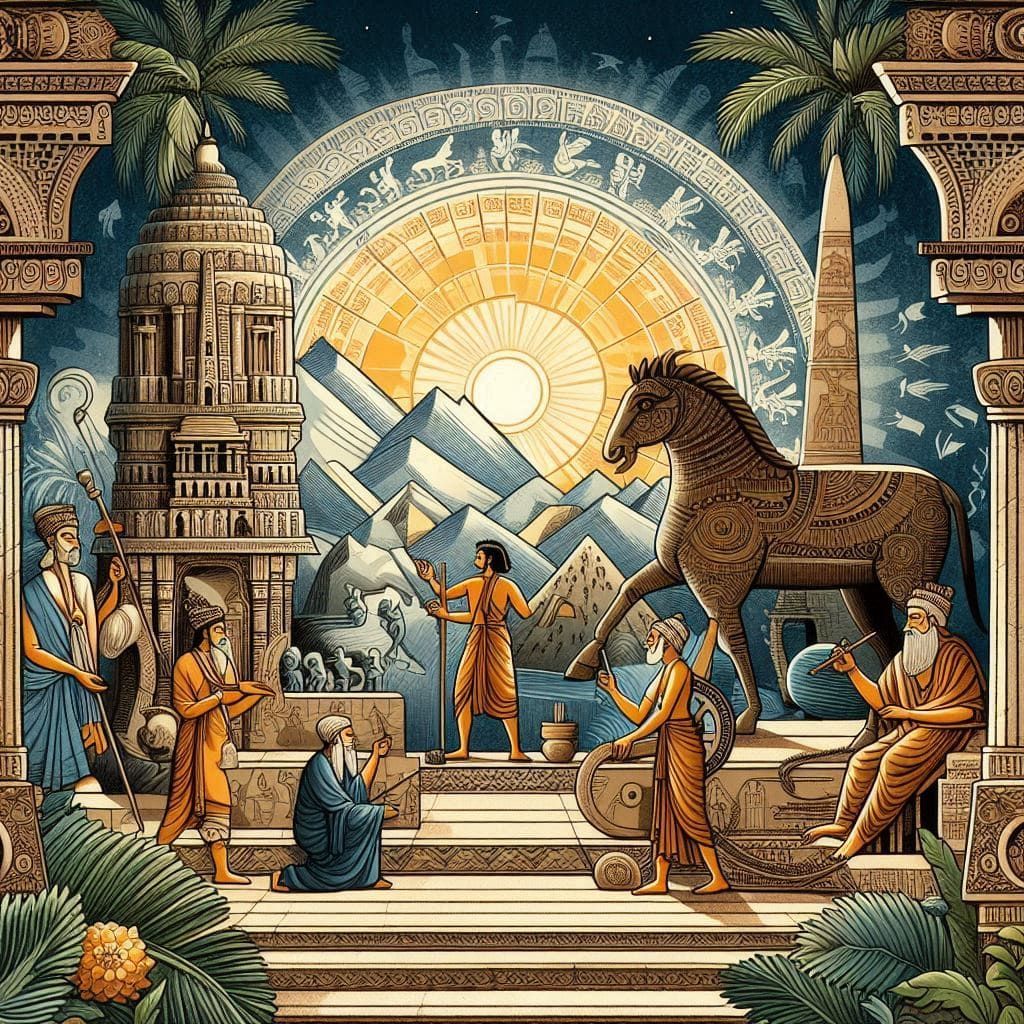
Ancient history is brimming with fascinating tales and curious facts, especially when delving into early civilizations like the Indus Valley. Flourishing between 3300 BCE and 1900 BCE, the Indus Valley Civilization was one of the world’s earliest urban cultures, renowned for its advanced city planning, sophisticated drainage systems, and mysterious undeciphered script. From the grid-patterned streets of Harappa and Mohenjo-Daro to their surprising dental practices and extensive trade networks, the Indus Valley people were innovators of their time. Join us as we uncover 100 interesting and funny facts about this enigmatic civilization, shedding light on their daily lives, remarkable achievements, and enduring mysteries.
- The Indus Valley Civilization was among the first urban cultures, known for its advanced city planning and impressive architecture.
- Indus Valley people built intricate drainage systems that were more advanced than some modern ones, preventing flooding and keeping the cities clean.
- The cities of Harappa and Mohenjo-Daro featured well-organized grid patterns, which were ahead of their time.
- Despite many attempts, the Indus script remains undeciphered, keeping many secrets of this civilization hidden.
- The Great Bath of Mohenjo-Daro might have been used for ritual purification, showing an early interest in public hygiene and community rituals.
- Indus Valley Civilization practiced dentistry as early as 7000 BCE, using primitive drills to treat tooth decay.
- They had extensive trade networks reaching Mesopotamia and Egypt, indicating a well-developed economy.
- The Indus people used standardized weights and measures, which facilitated trade and commerce.
- Many houses in Indus Valley cities had private wells, showcasing advanced water management techniques.
- They crafted detailed jewelry from gold and semi-precious stones, highlighting their artistic skills.
- The people of the Indus Valley were skilled in metallurgy, producing high-quality tools and ornaments.
- They cultivated wheat, barley, and peas, showing an understanding of agricultural practices.
- The civilization’s writing system included over 400 symbols, though its meaning remains a mystery.
- Indus Valley pottery was well-fired and durable, often decorated with geometric designs.
- They built large granaries to store surplus food, indicating organized food management.
- At its peak, the civilization had a population of over five million, making it one of the largest of its time.
- Indus Valley seals often depict animals like bulls and elephants, suggesting their significance in society.
- They practiced flood management through the construction of sophisticated embankments.
- Despite their advanced civilization, the reasons for its decline around 1900 BCE remain unclear.
- Indus Valley cities had no large palaces or temples, suggesting a society without centralized rulers.
- They used carts with wooden wheels for transportation, highlighting their technological advancements.
- Archaeological finds suggest the civilization was largely peaceful, with few weapons discovered.
- Indus Valley art includes small terracotta figurines, showcasing their artistic talent.
- The people wore garments made of cotton and wool, indicating textile production skills.
- They used a variety of musical instruments, reflecting their cultural richness.
- The civilization used a system of weights based on binary and decimal systems, showing mathematical understanding.
- Indus Valley children played with toy carts and animal figurines, highlighting a culture that valued play.
- They made intricate bead necklaces, which were traded across the region.
- The civilization practiced some form of proto-Hinduism, evident in their religious artifacts.
- They built multi-story houses with flat roofs, which were innovative for their time.
- The Indus people used copper and bronze tools, demonstrating their metallurgical expertise.
- They standardized brick sizes, which helped in building uniformly structured cities.
- They used boats to navigate rivers, facilitating trade and communication.
- The cities were divided into citadel and lower town areas, indicating urban planning.
- The Indus script was often written on seals and pottery, used for administrative purposes.
- They used faience, a glass-like material, to make beads and ornaments.
- The civilization had advanced town planning, with wide streets and well-built houses.
- Indus Valley people were possibly the first to spin cotton, revolutionizing textile production.
- They created intricate shell jewelry, which was highly valued.
- The civilization had public and private baths, emphasizing cleanliness and hygiene.
- They used perforated pottery for straining liquids, showing early culinary innovation.
- The Indus people domesticated animals like cattle and buffalo, crucial for their agriculture.
- They used dice made of terracotta for gaming, indicating a love for leisure activities.
- The civilization practiced water conservation techniques, crucial for sustaining their cities.
- Indus Valley art includes detailed carvings on seals, depicting various aspects of life.
- They built docks along rivers, facilitating trade and transportation.
- The people used terra cotta to create cooking utensils, reflecting their daily life needs.
- The civilization had a diverse diet, including fish, meat, and grains.
- They used spindle whorls for spinning thread, showing textile production processes.
- Indus Valley seals were used for trade and identification, akin to modern-day logos.
- The civilization had complex bead workshops, producing finely crafted beads.
- They used bangles made of shells and terracotta, which were popular adornments.
- The people incorporated a variety of grains in their diet, demonstrating agricultural diversity.
- They constructed large public buildings, which likely served administrative purposes.
- The civilization had a pictographic writing system, though its meaning is still unknown.
- Indus Valley seals often depict religious symbols, indicating spiritual beliefs.
- They used stone weights for precise measurements, crucial for trade.
- The civilization had a form of early banking systems, facilitating trade and commerce.
- They crafted detailed metal figurines, showcasing their metallurgical skills.
- Indus Valley pottery was often painted with geometric designs, reflecting artistic traditions.
- They used well-made brick kilns, which produced durable building materials.
- The civilization had organized marketplaces, where goods were traded.
- They practiced agriculture using irrigation techniques, enhancing crop yields.
- The Indus people possibly practiced yoga, as suggested by certain figurines.
- They used animal motifs in their art, reflecting the importance of animals in their culture.
- The civilization had a hierarchical society, evident in the varying sizes of homes.
- They built large walls for flood protection, showing their engineering capabilities.
- The people used stamps with animal designs, likely for trade purposes.
- Indus Valley children had clay toys, indicating a society that valued childhood.
- They practiced early forms of drainage systems, crucial for urban sanitation.
- The civilization had advanced textile production, evident in their clothing remains.
- They used seals to secure goods for trade, ensuring authenticity.
- The people created intricate pottery designs, showcasing their artistic skills.
- Indus Valley artisans were skilled in stone carving, producing detailed sculptures.
- They used earthenware jars for storage, essential for preserving food and water.
- The civilization had communal granaries, indicating organized food distribution.
- They practiced flood control with levees, protecting their cities from inundation.
- The people used fish hooks made of copper, indicating fishing as a food source.
- Indus Valley seals often had inscriptions, possibly identifying ownership or trade items.
- They built sophisticated sewage systems, crucial for urban sanitation.
- The civilization had advanced urban planning, with well-defined residential and commercial areas.
- They used cotton to make clothing, which was a revolutionary textile.
- The people created detailed terracotta figurines, reflecting their artistic abilities.
- Indus Valley art includes animal sculptures, indicating their significance in culture.
- They used earthenware lamps for lighting, showing early advancements in domestic technology.
- The civilization had organized civic planning, with clearly defined public spaces.
- They practiced early forms of water filtration, ensuring clean water supply.
- The people had a diet rich in lentils, indicating agricultural variety.
- Indus Valley seals show scenes of daily life, offering a glimpse into their world.
- They used terra cotta plaques for decoration, showcasing their aesthetic sensibilities.
- The civilization had a form of symbolic art, evident in their artifacts.
- They built large storage facilities for grain, ensuring food security.
- The people had a variety of pottery shapes, reflecting their culinary diversity.
- Indus Valley houses were built with baked bricks, providing durability.
- They used bullock carts for transportation, showing their use of animal labor.
- The civilization had a peaceful and prosperous society, with little evidence of warfare.
- They practiced animal husbandry, crucial for their agriculture.
- The people used terracotta for sculpting, producing various artifacts.
- Indus Valley seals are found across ancient trade routes, indicating extensive commerce.
- The civilization’s decline around 1900 BCE remains a mystery, adding to its enigmatic history.
Team AajTak.Com

 AAj TAK GK
Leave a comment