
Introduction
Tucked between the Tigris and Euphrates rivers, Mesopotamia, often hailed as the “cradle of civilization,” was a melting pot of cultures, innovations, and mysteries. This ancient region, encompassing parts of modern-day Iraq, Syria, Turkey, and Iran, laid the foundation for countless advancements that shape our world today.
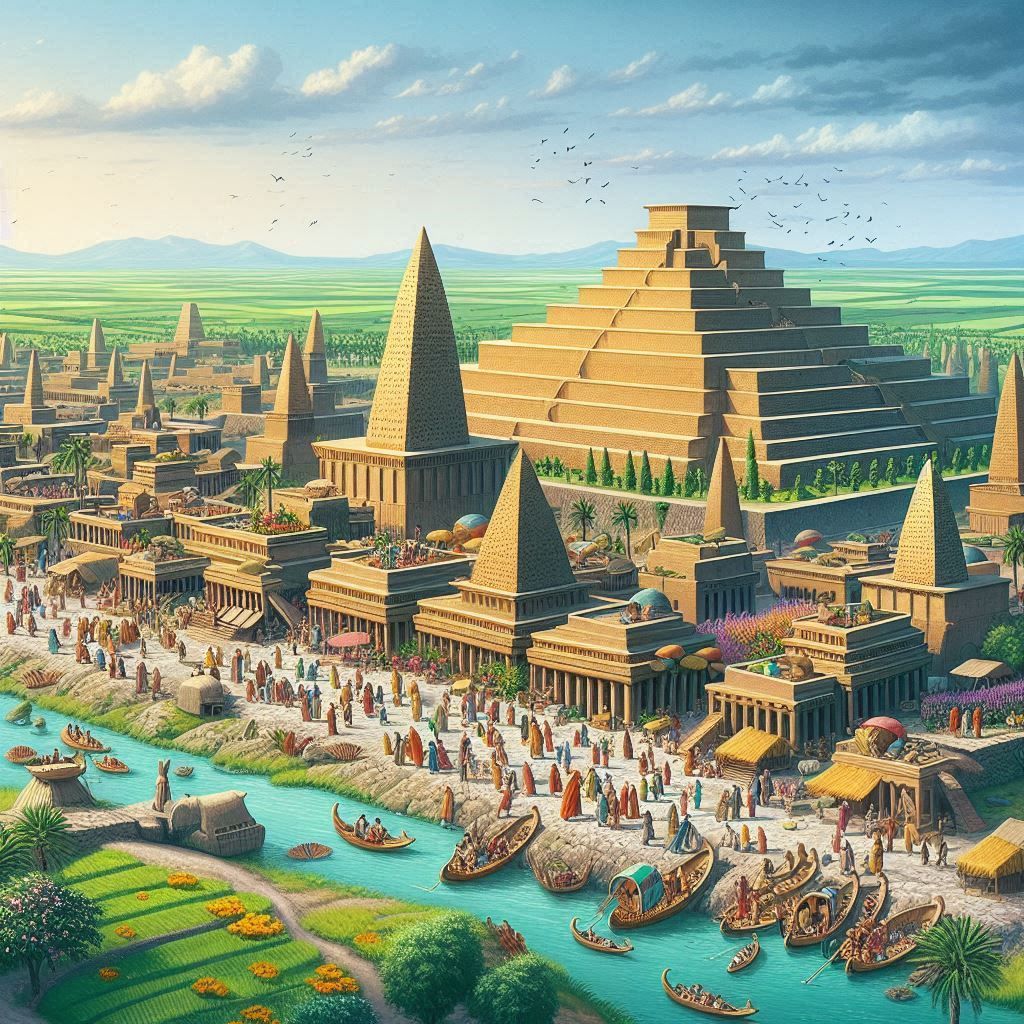
From the invention of writing to the development of complex legal systems, Mesopotamia’s story is one of unparalleled human ingenuity. Let’s embark on a captivating journey through time as we uncover 100 astonishing facts about this extraordinary civilization.
Get ready to be amazed!
- Cradle of Civilization: Mesopotamia is often called the “Cradle of Civilization” as it was home to the earliest known human civilizations.
- Geographic Location: It was located between the Tigris and Euphrates rivers, in present-day Iraq and parts of Iran, Syria, and Turkey.
- Sumerians: The Sumerians were one of the first groups to settle in Mesopotamia, around 4500 BCE.
- City-States: Mesopotamia was divided into city-states, each with its own ruler.
- Uruk: One of the first major cities, Uruk, is considered the world’s first true city.
- Cuneiform Writing: The Sumerians developed cuneiform, one of the earliest systems of writing.
- Ziggurats: Ziggurats were massive temple complexes that served religious purposes and dominated Mesopotamian cityscapes.
- Epic of Gilgamesh: The Epic of Gilgamesh, from Mesopotamia, is one of the oldest known pieces of literature.
- Mathematics: Mesopotamians developed an advanced system of mathematics, including the concept of zero and a base-60 (sexagesimal) numeral system.
- Astronomy: They were keen astronomers and mapped the stars and planets, creating early star catalogs.
- Legal Codes: The Code of Hammurabi, a well-preserved Babylonian code of law from 1754 BCE, is one of the oldest deciphered writings of significant length.
- Agriculture: Mesopotamians invented irrigation techniques that allowed them to farm arid lands.
- The Wheel: They are credited with the invention of the wheel, which revolutionized transport and pottery.
- Calendar: Mesopotamians developed a lunar calendar to track time and seasons.
- Trade: They engaged in extensive trade with neighboring regions, using rivers as main trade routes.
- Metallurgy: They were among the first to use bronze, an alloy of copper and tin, for tools and weapons.
- Temples: The primary religious building was the temple, dedicated to the city-state’s patron god or goddess.
- Polytheism: Mesopotamians were polytheistic, worshipping multiple gods and goddesses associated with natural forces and aspects of life.
- Scribes: Scribes were highly respected professionals who recorded events, transactions, and stories on clay tablets.
- Epic of Creation: The Enuma Elish is an ancient Mesopotamian epic that describes the creation of the world.
- Gardens: The Hanging Gardens of Babylon, one of the Seven Wonders of the Ancient World, is thought to have been built in Mesopotamia.
- Gilgamesh: Gilgamesh, a historical king of Uruk, became a legendary figure in Mesopotamian mythology.
- Plow: They invented the plow, which significantly advanced agriculture.
- Schools: Mesopotamia had one of the earliest forms of formal education, where scribes were trained.
- Law and Order: They had organized legal systems and courts to handle disputes and crimes.
- Literature: They composed hymns, prayers, and poems, which were inscribed on clay tablets.
- Gardening: They practiced sophisticated gardening and horticulture.
- Architecture: Mesopotamian architecture included palaces, temples, and residential buildings made from mudbrick.
- Seals: Cylinder seals, engraved with images and texts, were used to sign documents and mark possessions.
- Diet: Their diet included barley, dates, vegetables, fish, and meat.
- Clothing: They wore garments made of wool and flax.
- Pottery: Mesopotamians were skilled potters and used potter’s wheels.
- Music: They played musical instruments like lyres, drums, and flutes.
- Medicine: Mesopotamian medicine combined magic and natural remedies.
- Libraries: The Assyrian king Ashurbanipal established one of the world’s earliest libraries in Nineveh.
- Architecture: They built extensive public works, including canals and city walls.
- Divination: They practiced divination, interpreting omens from the natural world.
- Textiles: They produced intricate textiles and dyed fabrics.
- Slavery: Slavery existed, but slaves could buy their freedom.
- Mathematics: They developed geometry for building and land measurement.
- Cosmology: They had detailed cosmological theories about the structure of the universe.
- Writing Tools: They used styluses made from reeds to write on clay tablets.
- Priests: Priests held significant power and controlled temple economics.
- Economic Systems: Mesopotamians developed complex economic systems with trade, taxation, and markets.
- Epic Tales: They told epic tales of heroes, gods, and mythical creatures.
- Taxation: They had structured taxation systems to fund public works and armies.
- Social Classes: Mesopotamian society had distinct social classes, including nobility, priests, commoners, and slaves.
- Metalworking: They excelled in metalworking, creating tools, weapons, and jewelry.
- Boats: They built boats and ships for fishing, trade, and transport.
- Theocracy: Many Mesopotamian city-states were theocracies, with rulers seen as divine representatives.
- Education: Only boys, primarily from wealthy families, received formal education.
- Women: Women had some legal rights but were largely under male authority.
- Deities: Major gods included Anu (sky god), Enlil (god of air), and Inanna (goddess of love and war).
- Astral Religion: Mesopotamians believed that gods communicated through the stars.
- Language: They spoke languages like Sumerian and Akkadian.
- King Sargon: Sargon of Akkad established one of the world’s first empires.
- Dynasties: Mesopotamia saw many ruling dynasties, including the Akkadian, Babylonian, and Assyrian empires.
- Trade Goods: They traded goods like textiles, grains, and precious stones.
- Art: Mesopotamian art included intricate carvings and bas-reliefs.
- Bureaucracy: They developed sophisticated bureaucratic systems for administration.
- Military: Mesopotamian armies used chariots and bronze weapons.
- Sacrifices: Religious rituals often included animal sacrifices.
- Gates of Ishtar: The Ishtar Gate of Babylon was one of the most famous structures, adorned with glazed bricks and reliefs.
- Inventions: They invented the concept of time, dividing the day into 24 hours and the hour into 60 minutes.
- Kingship: Kings were often seen as chosen by the gods and had religious as well as political duties.
- Construction: They developed techniques for constructing large buildings using mudbrick and bitumen.
- Nomads: Nomadic tribes interacted with and influenced Mesopotamian civilizations.
- Calendar: Their calendar had 12 months and was used for agricultural and religious purposes.
- Chariots: The invention of the chariot revolutionized Mesopotamian warfare.
- Babylon: Babylon became a major cultural and political center under Hammurabi and Nebuchadnezzar II.
- Literacy: Literacy was limited to a small elite group of scribes and officials.
- Eclipse Predictions: Mesopotamian astronomers could predict lunar and solar eclipses.
- Libraries: Clay tablets were stored in libraries and archives, preserving knowledge.
- Craftsmen: Skilled craftsmen created luxury goods for the elite.
- Hammurabi: King Hammurabi is famous for his comprehensive code of laws.
- Religion: Religion was integrated into all aspects of life, from politics to agriculture.
- Justice: Mesopotamian justice included retributive measures like “an eye for an eye.”
- Priestesses: Some women served as priestesses and held religious authority.
- Royal Tombs: Royal tombs contained valuable grave goods, indicating belief in the afterlife.
- Economy: The economy was based on agriculture, trade, and tribute.
- Epic Poetry: Epic poetry like the Epic of Gilgamesh depicted the exploits of heroes and gods.
- Assyrians: The Assyrian Empire was known for its military prowess and expansive conquests.
- Sumerian King List: The Sumerian King List records the reigns of kings, blending history and myth.
- Cultural Exchange: Mesopotamia had cultural exchanges with neighboring civilizations like Egypt and the Indus Valley.
- Legal Documents: Legal documents included contracts, wills, and deeds.
- Hanging Gardens: The Hanging Gardens of Babylon were said to be a wonder of the ancient world.
- Plumbing: They developed early forms of plumbing and sewage systems.
Team AajTak.Com

 AAj TAK GK
Leave a comment