
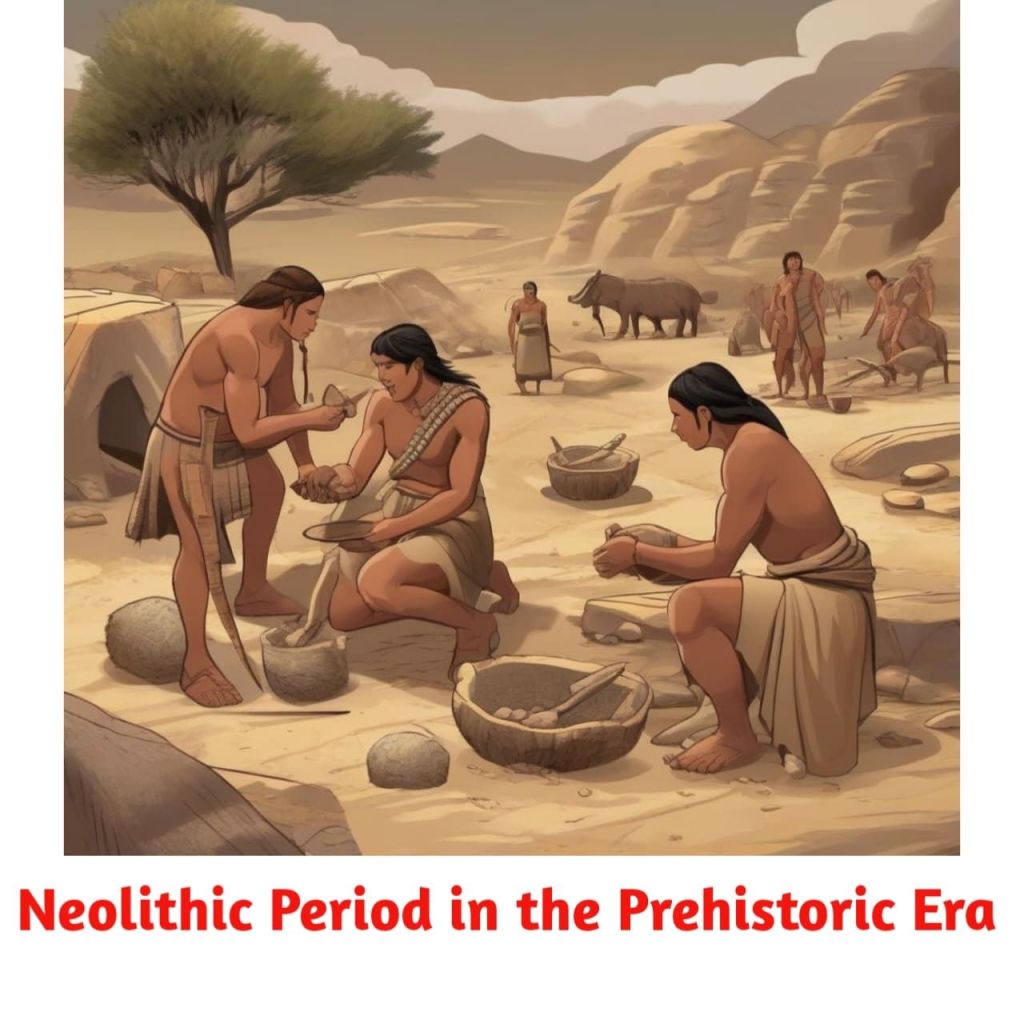
- Definition: The Neolithic Period, also known as the New Stone Age, spans from around 10,000 BCE to 3,000 BCE.
It marks the transition from nomadic hunter-gatherer societies to settled agricultural communities. - Agriculture: The development of agriculture was a significant hallmark of the Neolithic era.
Humans began to domesticate plants and animals, leading to the establishment of permanent settlements. - Domestication: Early Neolithic farmers domesticated plants like wheat, barley, and lentils.
This process involved selecting and breeding plants with desirable traits. - Animals: The first domesticated animals included dogs, sheep, goats, cattle, and pigs.
These animals provided meat, milk, wool, and labor. - Settlements: Neolithic people built the first permanent villages and towns.
These settlements often included homes, storage buildings, and communal structures. - Pottery: The invention of pottery allowed for better storage and cooking of food.
Pottery vessels were used for storing grains, water, and other resources. - Tools: Neolithic tools became more advanced with the use of polished stone.
Axes, sickles, and grinding stones were common tools used in farming. - Housing: Homes were typically made from mud brick, stone, and wood.
These structures provided better protection from the elements and predators. - Clothing: The domestication of sheep led to the use of wool for clothing.
People began to weave cloth from wool and plant fibers. - Social Structure: Societies became more complex with distinct social hierarchies.
Roles were divided among farmers, craftsmen, leaders, and religious figures. - Religion: Neolithic people practiced animism, believing in spirits in nature.
They often built shrines and performed rituals to honor these spirits. - Art: Neolithic art included pottery decoration, sculpture, and painting.
Art often depicted animals, plants, and geometric designs. - Trade: The development of agriculture led to surplus food, which could be traded.
Trade networks expanded, allowing for the exchange of goods and ideas. - Wheel: The invention of the wheel revolutionized transportation and pottery making.
It made moving heavy loads easier and improved pottery techniques. - Writing: The earliest forms of writing began to appear during the late Neolithic.
These early scripts were used for record-keeping and communication. - Calendars: Neolithic people developed calendars to track agricultural cycles.
This helped them plan planting and harvesting times more effectively. - Megaliths: Large stone structures, such as Stonehenge, were built during the Neolithic.
These structures had religious, astronomical, and social significance. - Farming Techniques: Innovations like irrigation and plowing improved agricultural productivity.
These techniques allowed for the cultivation of larger areas of land. - Population Growth: Stable food supplies led to population growth and the expansion of communities.
Larger populations could support more specialized roles and complex societies. - Diseases: The close proximity of humans and animals in settlements led to the spread of diseases.
Diseases like smallpox and measles became more common as populations grew. - Metallurgy: The Neolithic period saw the beginnings of metalworking with the use of copper.
This led to the development of tools and weapons that were stronger than stone. - Burial Practices: Neolithic burial practices included elaborate graves and tombs.
Graves often contained goods and artifacts for the afterlife. - Communal Living: Some Neolithic communities practiced communal living and shared resources.
This fostered cooperation and social cohesion within settlements. - Agricultural Tools: The invention of the plow allowed for more efficient farming.
Plows made it easier to till the soil and plant crops. - Climate Change: Changes in climate during the Neolithic affected agricultural productivity.
Adaptations to climate changes included crop rotation and irrigation. - Food Storage: Improved storage techniques helped protect food supplies from pests and spoilage.
Granaries and storage pits were common in Neolithic settlements. - Animal Husbandry: The selective breeding of animals improved livestock quality.
This resulted in animals that provided more meat, milk, and wool. - Permanent Homes: Neolithic homes were often rectangular and made from durable materials.
This shift from temporary shelters to permanent homes marked a significant change in lifestyle. - Stone Tools: Neolithic tools were often made from polished stone for better durability.
These tools included axes, knives, and sickles. - Agricultural Communities: The rise of agricultural communities led to the formation of early states and civilizations.
These communities had more complex social and political structures. - Crop Rotation: Neolithic farmers practiced crop rotation to maintain soil fertility.
This method helped prevent soil depletion and increased crop yields. - Animal Bones: Animal bones were used to create tools and ornaments.
Bones were shaped into needles, hooks, and decorative items. - Textiles: The invention of the loom allowed for more complex weaving techniques.
Textiles became an important part of Neolithic life for clothing and trade. - Craft Specialization: Some individuals specialized in crafts like pottery, weaving, and tool making.
This specialization led to improved quality and innovation in these areas. - Storage Buildings: Neolithic settlements often included storage buildings for food and tools.
These buildings helped ensure a stable food supply throughout the year. - Domesticated Plants: The domestication of plants led to the cultivation of cereals, legumes, and vegetables.
These crops formed the basis of Neolithic diets. - Animal Dung: Animal dung was used as fertilizer to enrich the soil.
This practice helped improve crop yields and soil health. - Mortar and Pestle: Tools like the mortar and pestle were used to grind grains and seeds.
These tools made it easier to process food for cooking and storage. - Agricultural Surplus: Surplus food allowed for the development of trade and commerce.
Excess crops could be traded for goods and resources not available locally. - Sedentary Lifestyle: The shift to a sedentary lifestyle allowed for the development of more complex societies.
People could invest time in building homes, creating art, and developing technology. - Harvesting Tools: Tools like sickles and scythes were used to harvest crops efficiently.
These tools made it easier to gather large amounts of food quickly. - Permanent Structures: Neolithic architecture included permanent structures like houses, temples, and fortifications.
These buildings provided stability and protection for communities. - Pottery Techniques: Neolithic pottery techniques included coiling and wheel-throwing.
These methods allowed for the creation of more complex and durable pottery. - Domesticated Dogs: Dogs were among the first animals to be domesticated.
They served as companions, hunting partners, and guards. - Agricultural Implements: Implements like hoes and digging sticks were used to cultivate the soil.
These tools helped prepare the land for planting and improve crop yields. - Surplus Storage: Surplus food was stored in granaries and pits to ensure a stable food supply.
This practice helped prevent food shortages and supported larger populations. - Social Hierarchies: The development of agriculture led to the emergence of social hierarchies.
Some individuals gained more power and wealth, leading to class distinctions. - Megalithic Structures: Large stone structures like dolmens and menhirs were built during the Neolithic.
These structures had religious, ceremonial, and social significance. - Irrigation Systems: Neolithic farmers developed irrigation systems to water their crops.
These systems allowed for the cultivation of land that would otherwise be too dry. - Domesticated Cattle: Cattle were domesticated for meat, milk, and labor.
They played a crucial role in Neolithic agriculture and economy. - Agricultural Diet: Neolithic diets were based on cultivated grains, legumes, and domesticated animals.
This shift from foraging to farming provided more reliable food sources. - Metal Tools: The use of metal tools began to emerge during the later Neolithic.
Copper tools were stronger and more durable than stone tools. - Burial Customs: Neolithic burial customs included graves, tombs, and funerary objects.
These practices reflected beliefs about the afterlife and social status. - Sedentism: The transition to a sedentary lifestyle allowed for the accumulation of goods and resources.
People could build permanent homes and store surplus food. - Crop Cultivation: Neolithic farmers cultivated a variety of crops, including wheat, barley, and peas.
These crops formed the basis of Neolithic agriculture. - Communal Projects: Neolithic communities often worked together on large projects like building structures and irrigation systems.
These projects required cooperation and organization. - Domesticated Goats: Goats were among the first animals to be domesticated for milk, meat, and hides.
Team AajTakGk

 AAj TAK GK
Leave a comment